Mongolian Public Health Ecosystem Represented at the 80th UN General Assembly Science Summit
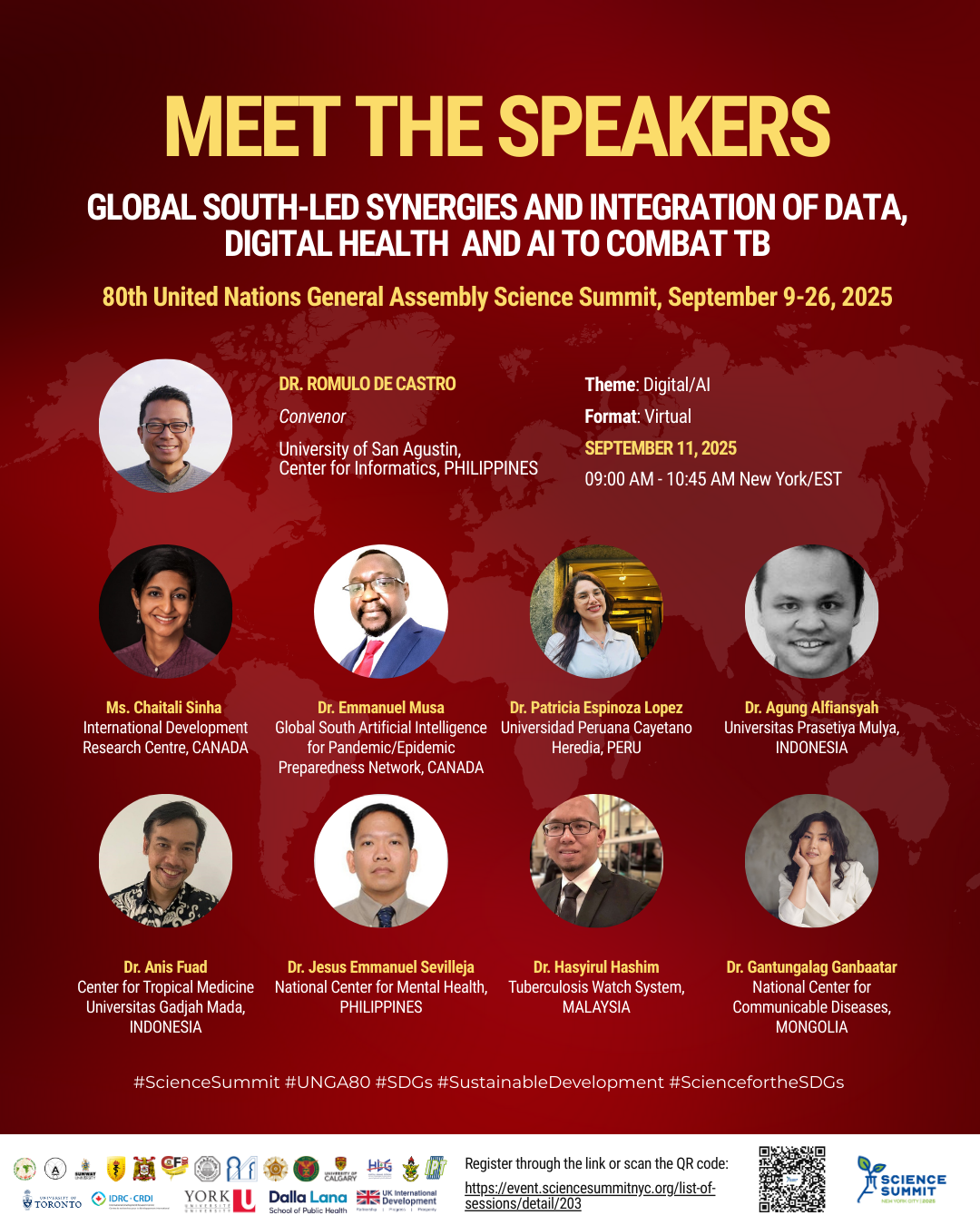
The Mongolian public health and scientific community proudly took the global stage at the 80th United Nations General Assembly (UNGA80) Science Summit, held virtually in September 2025.
Global South-Led Synergies in AI
During a highly anticipated panel titled "Global South-Led Synergies and Integration of Data, Digital Health, and AI," international experts convened to discuss the transformative power of Artificial Intelligence in combating infectious diseases. The session highlighted how countries in the Global South are not just adopting, but actively leading the development of digital health architectures.
Representing Mongolia was Dr. Gantungalag Ganbaatar from the National Center for Communicable Diseases (NCCD). Her participation alongside esteemed global health leaders highlights the growing digital and epidemiological capabilities within the Mongolian health sector.
The AI4PEP Network in Action
The panel was heavily supported by our parent network, the Global South Artificial Intelligence for Pandemic/Epidemic Preparedness Network (AI4PEP), and our funders at the International Development Research Centre (IDRC). Key speakers included:
- Ms. Chaitali Sinha (IDRC, Canada)
- Dr. Emmanuel Musa (AI4PEP Network, Canada)
- Prominent researchers from the Philippines, Peru, Indonesia, and Malaysia.
Relevance to the AIZoOM Mission
While this specific UNGA session focused heavily on Tuberculosis (TB), the technological frameworks discussed—data integration, responsible AI deployment, and bridging the gap between digital developers and frontline health workers—are the exact same frameworks the AIZoOM project is currently building for zoonotic diseases like Yersinia pestis.
Prof. Tseren-Onolt Ishdorj, leading the AIZoOM project, noted:
"Seeing our colleagues from the Mongolian health sector share their insights at the UN level alongside our AI4PEP and IDRC partners is deeply inspiring. It validates our shared national strategy: that integrating Artificial Intelligence into our public health infrastructure is not just a local priority, but a recognized global necessity for achieving the Sustainable Development Goals (SDGs)."